
Continuing with the love bombs…
This one feels familiar too - but in a different way. If Storge is the love that forms us quietly, Philia is the love that finds us along the way.
This is the love of friendship. 🤝Not face-to-face like romance. But shoulder-to-shoulder.
Friends don’t spend all their time gazing at each other. They walk together. They look outward. They share direction.
Philia asks a question we don’t always notice ourselves asking: Do you see what I see? Do you care about what I care about? This is the love of shared truth. Shared values. Shared pursuit.
Scripture says that when David met Jonathan, "After David had finished talking with Saul, Jonathan became one in spirit with David, and he loved him as himself." (1 Samuel 18:1) (NIV) Not by blood. Not by attraction. But by recognition.
Philia is the least biological of our loves. We don’t need it to survive. We don’t need it to reproduce. Which is exactly why it changes us. This love is chosen. It grows through conversation. Through disagreement. Through honesty that costs something. "As iron sharpens iron, so one person sharpens another." Proverbs 27:17 (NIV). Real friends don’t just affirm you - they refine you.
Keep in mind, though, that friendship can quietly become comfortable. Shared truth can harden into shared certainty. Philia can shrink into an us that forgets the rest.
At its best though, Philia keeps us open. It teaches us how to listen. How to walk with difference. How to love without possession.
And here’s the quiet shift most of us don’t see coming:
Philia often prepares the ground for something deeper. Not because it intends to. But because closeness does that. Walking together changes the heart. Shared truth stirs desire. Connection awakens longing. Not all friendships cross that line - and they shouldn’t. But some do. And when they do, love takes on a different temperature. A different intensity. A different risk.
Tomorrow, we talk about that fire. The love that doesn’t just walk - it pulls.
One, Perfect Love. 💣
Continuing with the love bombs....
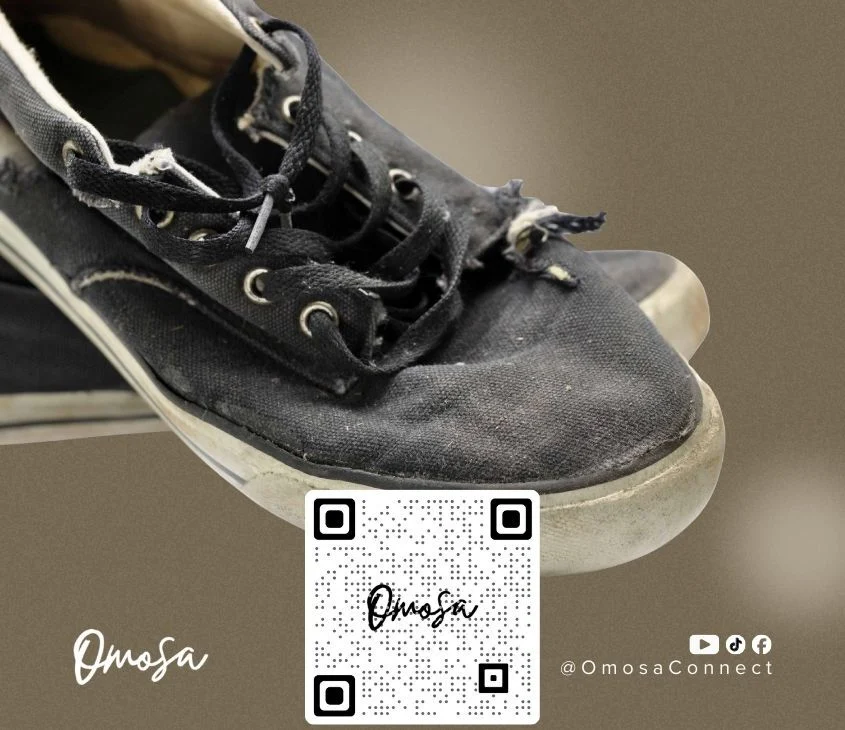
Most of us know this love…that shoe you refuse to throw away. The sole is tired. The colour has faded. But nothing else feels quite right. New shoes come and go. This one stays. You and your shoe have annoyed parents, siblings, partners, and friends.
They don’t understand it. But you don’t need them to because this is your shoe.
I know that the comparison is stretched. But this is Storge (pronounced stor-jay).
Storge is affection. It’s the most natural form of love there is. The love between parents and children. Between siblings. Between lifelong friends. Even the love you feel for a family pet… or an old pair of shoes that carried you through life. 🐕
It’s not loud. It doesn’t rush your heart or give you butterflies. It’s the love of familiarity. C.S. Lewis called it the "humblest" love because it doesn’t demand much.
It doesn’t need to impress. It simply wants to be near. To be present. Storge is the quiet security of knowing: I belong here.
In Greek and Biblical thought, Storge speaks of deep, familial affection; love formed through time, shared memories, loyalty, and acceptance. It endures not because it is exciting, but because it is faithful.
But a gentle warning - not from fear, just awareness: Storge can become comfortable to the point of closed. It can slip into a "us vs them" mindset. It loves what is familiar… and sometimes resists what is different.
Still, when held with humility, it becomes a foundation for something sacred.
“Be devoted to one another in love. Honor one another above yourselves.”
Romans 12:10 (NIV)
Tomorrow, we explore another love.
A different texture. A different pull.
One, Perfect Love.
Warning!
Expect a love bomb 💣 from us this month.😀
————————————
"I love pizza." 🍕
"I love this weather." ☀️
"I love my mom." ❤️
Notice how we’re use the same four-letter word to describe our taste in snacks as we do the deepest bonds of our souls. Daily language gets lazy. We lump every feeling into one bucket.
But the ancient Greeks? They knew better. They understood that love isn't just one thing - it’s a spectrum. They had four words for love.
This month on Omosa, we are going on a love journey. We’re going to deconstruct what we think Love is, starting with the human experience and ending with the Divine.
As stewards, if we want to understand God, we have to understand Love. But first, we have to clear up the confusion.
Start with a reflection: When you say "I love you," what are you actually promising?
Blessed Sunday. See you tomorrow.
One, Perfect Love.❤️
Language is dangerous because it is efficient.
We, people, like efficiency. We like shortcuts. But sometimes, those shortcuts hide sinister things right under our noses.
What if our trauma or ‘common sense’ - individual or collective - isn't the truth? What if we have become so complacent in ruining our own relationships simply because we’ve overlooked the potency and importance of the words we use and the language we conduct?
Let me share...
Last week, I hit a wall. I was navigating triggers across a wide spectrum of my life - family, professional, personal development, historic racial dynamics, the whole lot. But one specific moment stopped me cold.
It was the phrase: “I'll try.”
When I played it back, it wasn't a lie. It was someone probably being authentic. They may have genuinely meant, “I am going to give this my absolute best effort.” It’s possible that their heart was in the right place.
But to me listening? It was a lie.
I felt that “I'll try” is a loophole. It leaves the back door open. It prioritises their safety over my peace.
Compare that to: “I commit to this.”
When you say “I commit,” the atmosphere in the room changes. The anxiety dissipates. The other person has something solid to hold onto. “I’ll try” is a defense mechanism. “I commit” is a connection and communication bridge.
Of course, it is not always easy to say “I commit.” It feels risky. But we should also realise that by choosing the “safer” phrase, and depending on who is listening and how they are listening, we may inadvertently be choosing comfort over connection.
When they said “I will try”, and all I heard was “I am not committing”, wouldn’t it be fair for them to say: “Yes, it's a lie, but I didn't tell it.”
What we might be dealing with
This paradox is where relationships go to die. We think we are communicating, but we are actually just triggering each other.
I started looking at the other phrases we use on autopilot. It’s not just the big ones; it’s the filler words that carry hidden daggers:
- “We need to talk.” (The universal signal for impending doom).
- “But...” (The word that instantly deletes whatever affirmation came before it).
- “I thought so.” (The subtle art of proving someone wrong).
- “Literally.” (The exaggeration that erodes trust in our precision).
- “You know what I mean?” (The lazy request for the other person to do the emotional labour of understanding you).
- “What do you mean?” (Often heard not as curiosity, but as a challenge).
- “I am just saying.” (The shield we use after throwing a spear).
We are speaking a corrupted language. We are transmitting one signal (Intent), but the other person is receiving a completely different signal (Impact) based on their internal dictionary of past wounds, traumas and other experiences.
This is Collective Social Trauma.
We have allowed these glitches and distortions to words and language to run rampant. We have accepted that “I'm fine” is a socially acceptable lie, and that “ASAP” is a reasonable way to induce panic in a subordinate.
It’s Just Food for Thought (It’s Just F4T – It’s Just Effort)
So here’s a thought - should we be more interested in what happens when we become aware of the effects of collective social trauma on language and communication?
Perhaps when someone says “I’ll try,” we should recognise their vulnerability in the moment. Perhaps when someone says “ASAP,” they don’t mean “now” - they just mean they are anxious.
Perhaps we could learn to speak in a way that communicates our truths. And learn to listen in a way that hears others’ truths and not our own traumas.
I would really love to connect with you on this topic this week. Let’s engage on Omosa Connect.
Peace be with you. One, Perfect Love.
For me, Fridays are for Fasting.
The one thing that is very difficult not to notice on Fridays... you guessed it - it's the hunger. But that natural ache in the stomach is not just a biological signal anymore; it has become a spiritual diagnostic.
It is the voice of the First Birth - the natural man - demanding to be sustained.
Ever since this journey of Omosa began, fasting has become a profound act of Sacrifice. I voluntarily silence the demands of the flesh to amplify the voice of the Spirit. This is not punishment; it is Obedience. It is the discipline of saying "No" to the temporary so I can say "Yes" to the eternal.
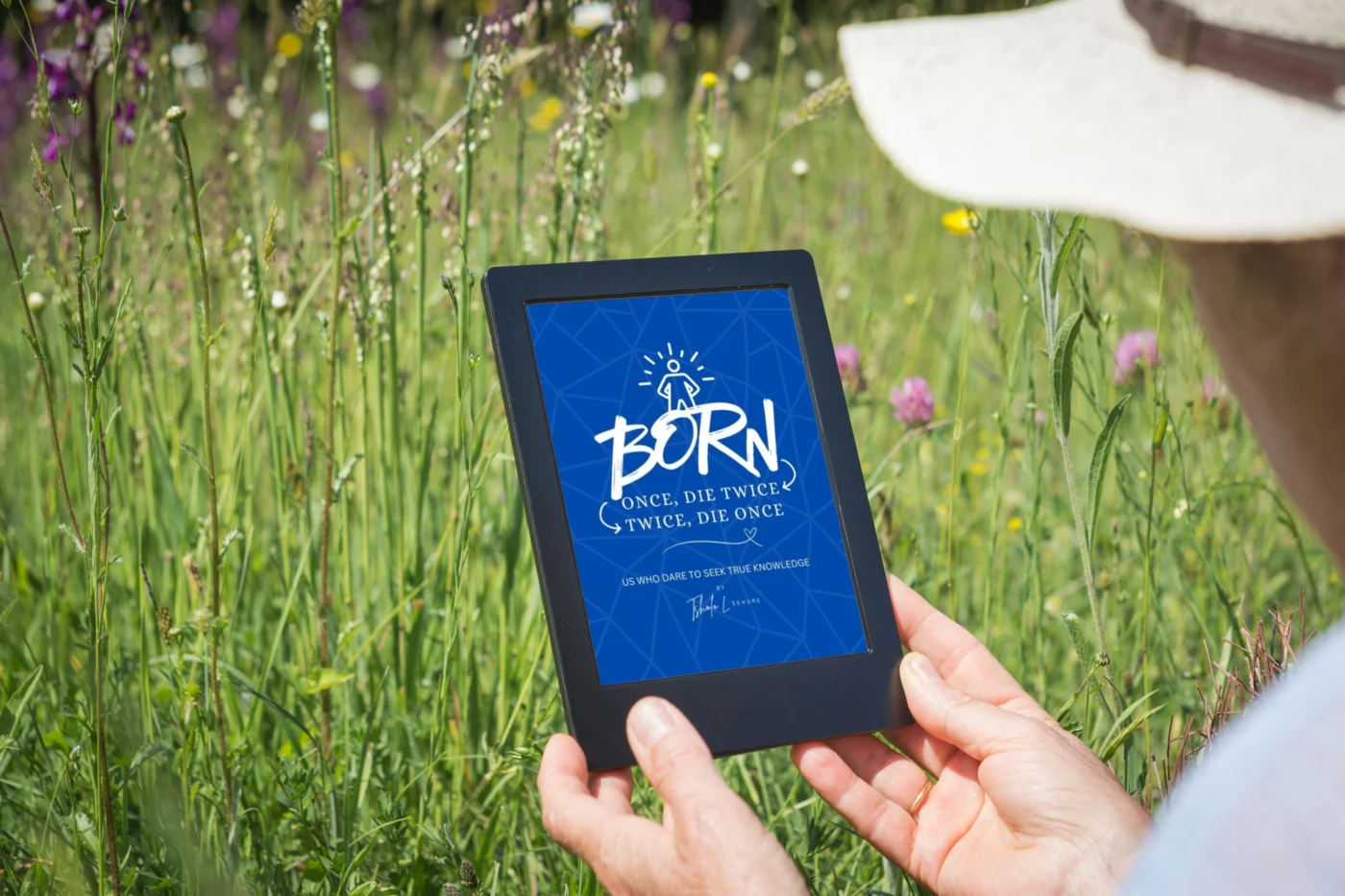
This friction between the physical and the spiritual is the heartbeat of the paradox I explore in the ebook I wrote a while back:
"A tongue twisting mouthful, right? Behind that simple four-word mishmash is a world of profound meaning... Born Once, Die Twice. Born Twice, Die Once."
Here is some food for thought:
If we steward only our physical life (Born Once), we face two deaths - the physical and the spiritual. But if we steward our spiritual regeneration (Born Twice), we face only one unavoidable physical transition.
Fasting is the practice ground for the reality of heaven. Every time you deny the appetite of the 'Born Once' nature, you are investing in the vitality of the 'Born Twice' nature.
The Book: Born Once, Die Twice. Born Twice, Die Once. An exploratory guide on stewarding your own existence.
This eBook explores timeless wisdom - traceable from the purported Martin Luther Bible to modern philosophy. Take a look inside and see if you can grab a few things on how not to merely survive the First Birth, but thrive in the Second.
"The King's Well" is a short-story e-book about a conceited African king who discovers a solution to his village's severe drought after he prays for guidance. This story teaches the importance of seeking help from a higher power and shows how a humble spirit can transform a ruler. This e-book is for anyone who enjoys reading uplifting and spiritual stories, as well as those interested in African culture and traditional values.
SOLD FOR R199 | FREE WITH MEMBERSHIP
https://www.omosa.co.za/product/the-kings-well-a-story-of-hope-and-faith/

Hands down, our world is loud. But your purpose doesn't have to be. We should stop trying to build a life out of the noise and scraps the world offers us. As stewards, we should build our Arks - lives of deep impact, unshakable peace, and Audacious Humility. It is time to stop drifting and start stewarding.
Why This Book?
Because we live in a marketplace of countless opinions and loud voices. From the moment we wake up, we are told who to be, what to own, and how to act. If we aren't careful, we spend our entire lives building a house on a foundation that doesn't belong to us.
The Bold Reverence is not a manual for material gain alone - that's just a byproduct; it is a commissioning for the steward who dares to believe there is a better way to live.
Written by Tsholo L. Sehume, this book is for the individual who wants surrender themselves to the fires from life as a blunt metal that is ready to be forged into a useful tool. The book explores the timeless wisdom of Psalm 112 - not as a distant ideal, but as a practical blueprint for the modern individual who dares to believe.
A Guide for the Imperfect Steward
You don't need to be perfect to leave a legacy. You just need to be positioned. This book explores:
- The Shift from Duty to Delight: Why following the Architect’s plan isn’t a restriction, but the secret to how the machine works best.
- The Audacious Humility Codex (AHC): An operating system for your life that balances the boldness to take up space with the humility to be led.
- True Wealth: Moving beyond the bank account to understand the 7 Rooms of a truly rich life.
- The Ultimate Truth: Understanding that you are designed to prosper, but you must build the character to sustain the weight of that glory.
Legacy is not what you leave for people; it is what you leave in people.
Whether you are a parent, a leader, or an everyday believer tired of the noise, this book is your quiet anchor in the storm.
SOLD FOR R399 | FREE WITH MEMBERSHIP

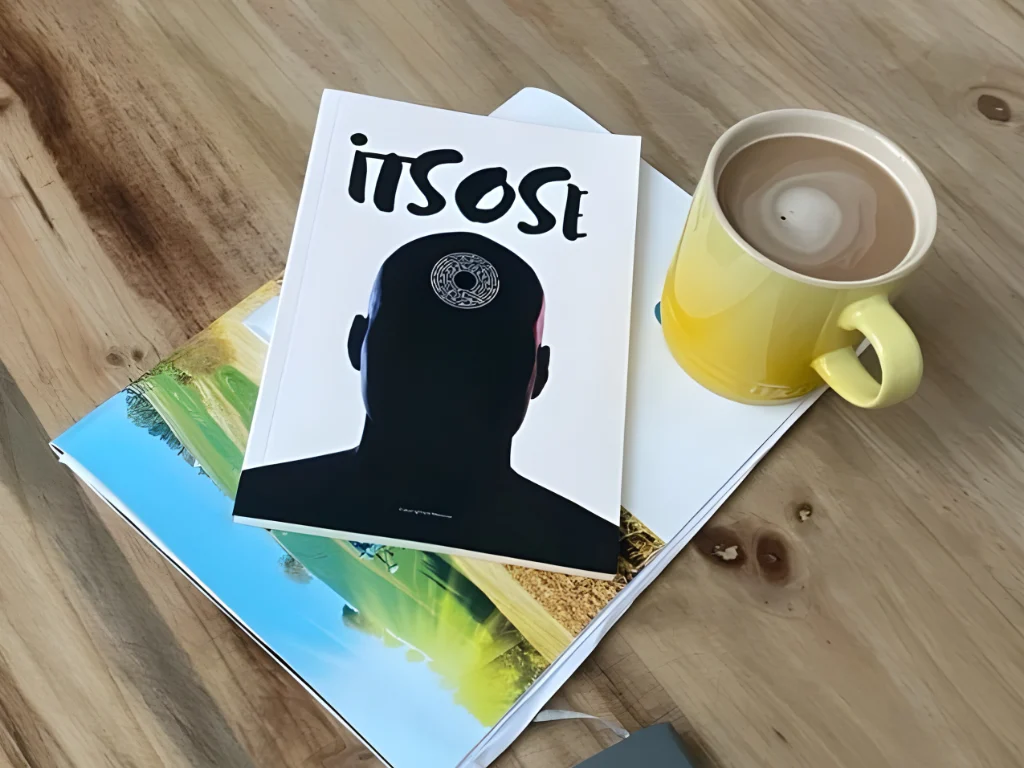
Through relatable language, a mixture ya English, Setswana and Kasi Lingo, Tsholo Sehume uses a style and examples to make “Itsose” a unique invitation and guide for you to reflect on your life’s journey and reframe failures as valuable lessons. Explore the concept of “Itsose” – the idea of embracing change and learning from every experience – to create a future filled with resilience and purpose.
Under "Itsose Topic 5 - How To Break a Bad Habit", the chapter opens like this:
"Guys, it’s not enough fela to know how to create good habits. It’s necessary to know how to break your bad habits, too. Kgaola dilo tse di sa go tsweleng mosola. Aner goetes di go busetsa ko morago but wena o imota ka tsone. Tswa daa klaar hela. Itshutlhe!"
Only R200 - Hard Copy. Excl. Delivery. - Buy it here: https://www.omosa.co.za/product/itsose/
Or get the SoftCopy of Amazon - https://www.amazon.com/ITSOSE-Habits-Never-Ending-Journey-Self-Improvement-ebook/dp/B0BTMJNZ3K
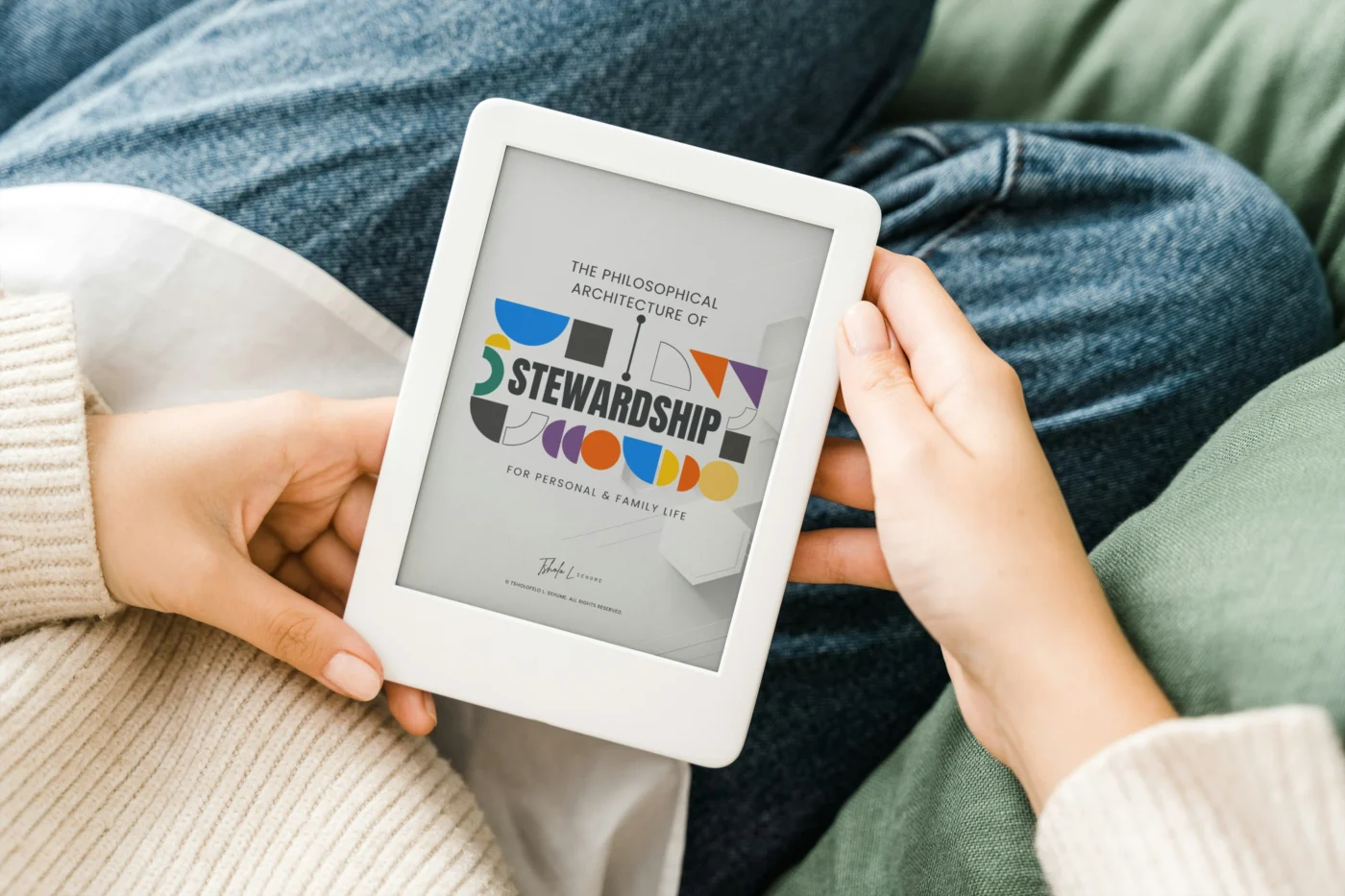
If you’re keen to read more about why we do things the way we do as Omosa, I wrote a paper that is the "why" behind everything.
The document touches on the Audacious Humility Codex (AHC) - our blueprint for closing that gap and moving from a life of high-stress "Ownership" to one of high-impact "Stewardship".
Here is what we dig into:
- Why we seem to curate a 'perfect external image' while our internal foundation feels hollow?
- How to stop acting like an "Owner" and start being a "Steward" who has the authority to multiply it.
- A look at how to stop compartmentalising your faith, work, and health, and start seeing them as one integrated ecosystem.
- A simple way to Anchor in reality, Refine your strategy, and Cultivate habits that actually stick.
This is an invitation to start architecting a life that actually lasts. Download The Philosophical Architecture of Stewardship
SOLD FOR R399 | FREE WITH MEMBERSHIP
https://www.omosa.co.za/connect/space/documents/post/the-philosophical-architecture-of-stewar
One, Perfect Love.
Tsholo L. Sehume
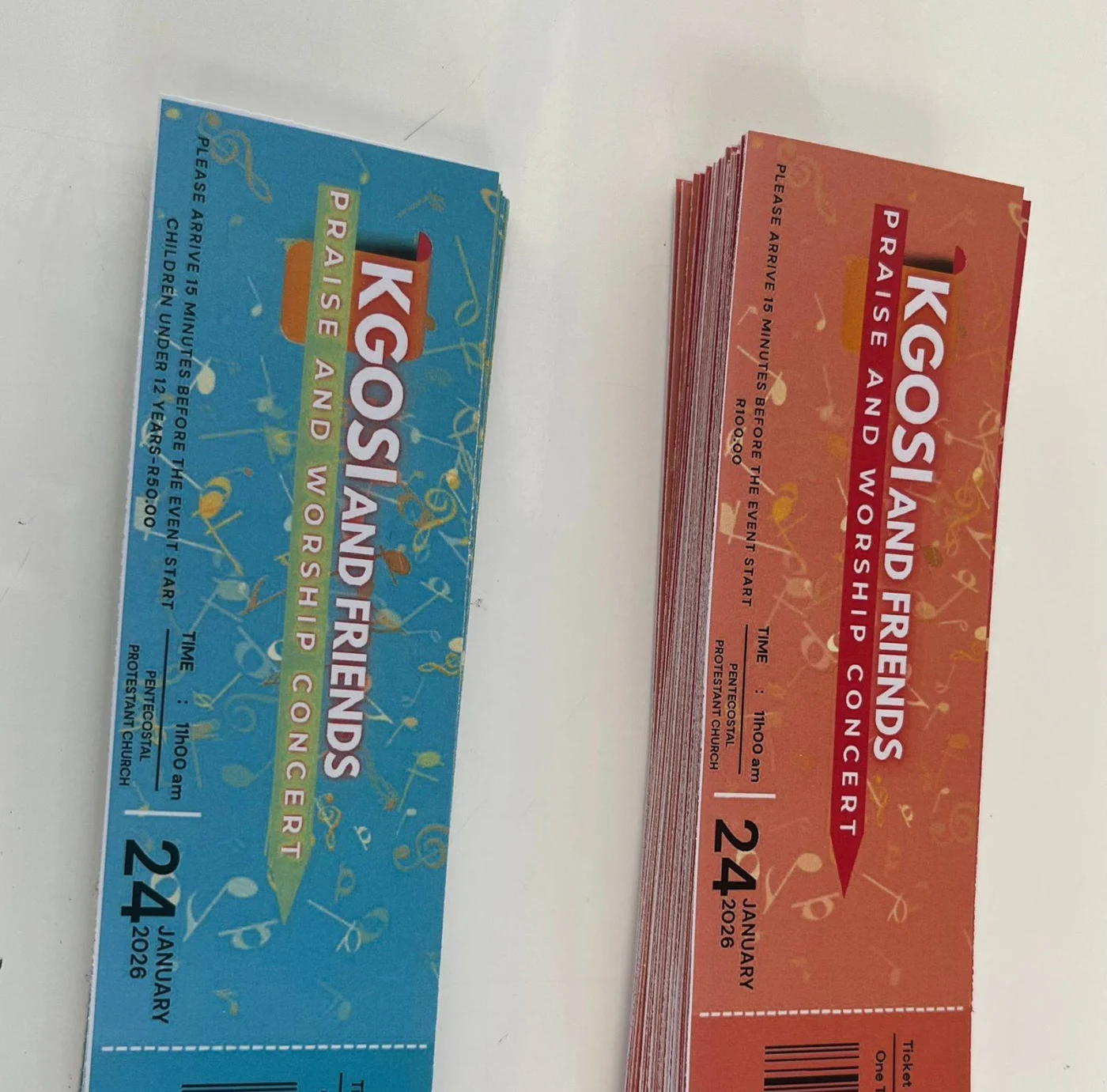
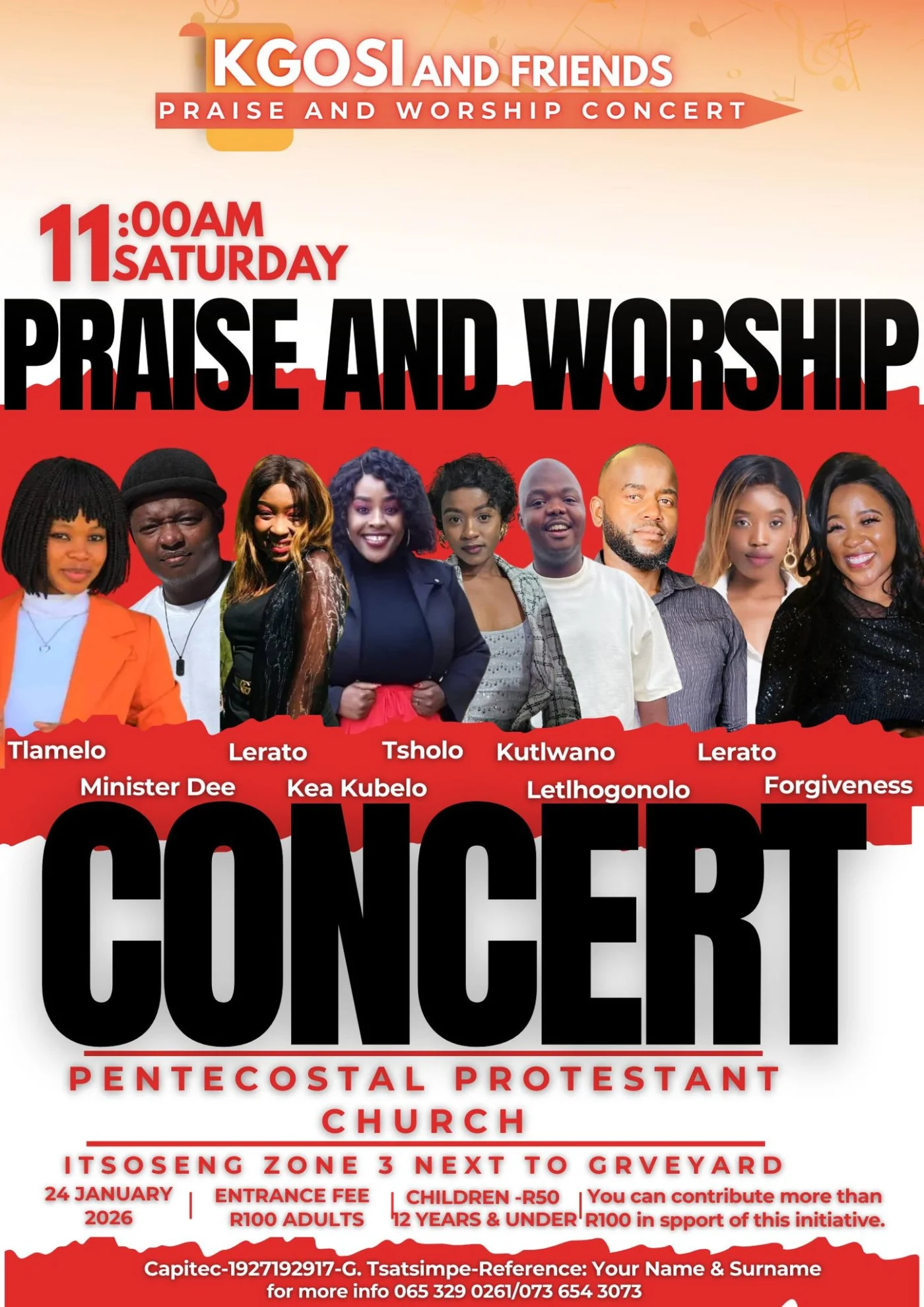
Tickets are still available, only R100 for Adults and R50 for children under 12 years.
24 January 2026
Pentecostal Protestant Church, Itsoseng Zone 3 next to Graveyard