


Most people think forgiveness is a personal virtue. That it’s something private, soft, spiritual. But there’s also a performative version people use for public points: they say “I forgive” because it looks mature, because it wins the room, because it protects their image. Meanwhile, they keep the file open inside – replaying the offence, harbouring ill-will, quietly punishing the person through distance, tone, or sabotage. That isn’t forgiveness. That’s PR.
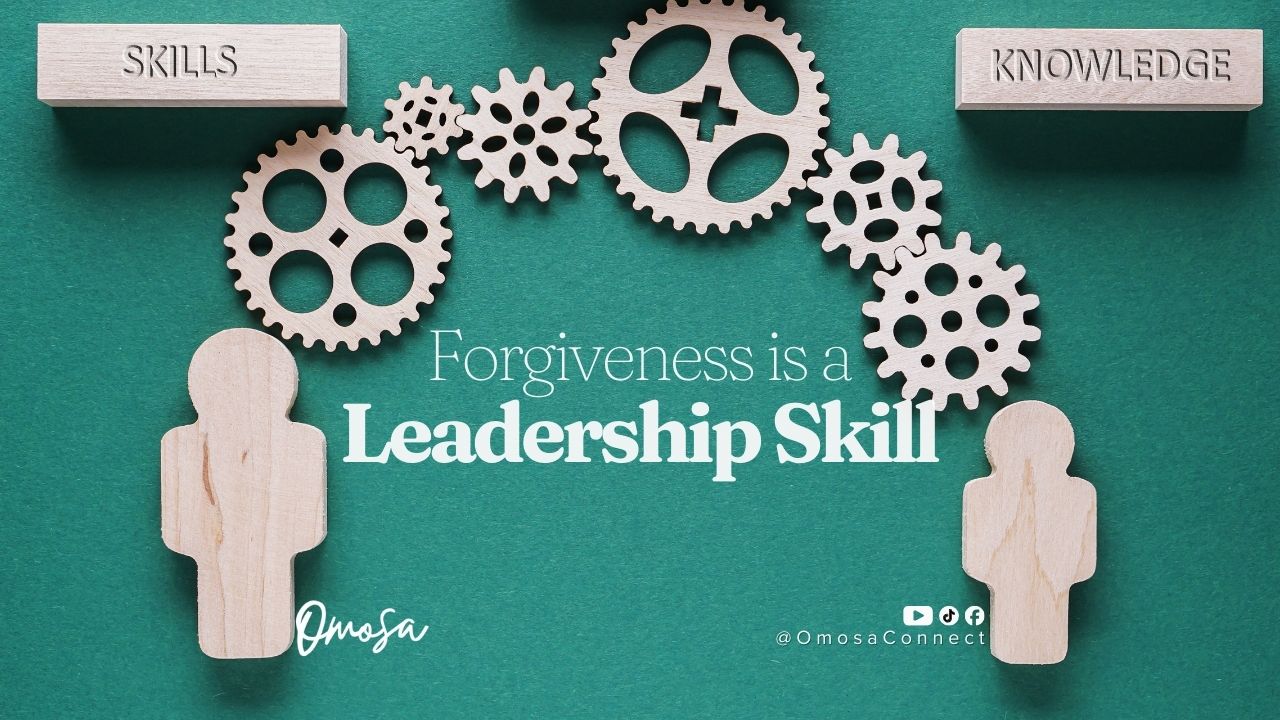
But regardless of what people’s real motives are, in real life i.e. in family, work, partnerships and communities, forgiveness is a leadership skill. Because leadership is stewardship. It’s governance. Forgiveness is deciding what gets carried, what gets corrected, and what gets released so the mission can move forward.
The stewardship case: unforgiveness is a hidden tax
Unforgiveness feels justified. It usually is. Something real happened. Something crossed a line. Something cost you. But here’s what people underestimate: holding a debt doesn’t just “stay in your heart.” It becomes a systems cost.
- It taxes attention.
- It hijacks tone.
- It turns decisions into reactions.
- It keeps the past running in the background like an app you forgot to close.
And the system pays for it – through tension, avoidance, passive aggression, mistrust, slow collaboration, and silent sabotage. This is why forgiveness is not a sentimental add-on. It’s operational.
Forgiveness is saying: I refuse to make this offence the operating system.
First clarity: forgiveness is not the same as reconciliation
A lot of confusion comes from mixing these up.
- Forgiveness is an internal decision about the debt: “I release my right to punish. I won’t carry vengeance.”
- Reconciliation is a relational outcome that requires trust, safety, and often time.
- Accountability is a boundary that protects the future: consequences, clarity, changed behaviour.
You can forgive and still set limits.
You can forgive and still require repair.
You can forgive and still say, “Access is earned.”
That is not a contradiction. That is leadership.
The physiological case: unforgiveness keeps you in threat mode
When people hold unresolved offense, their nervous system often acts like the threat is still present. The body doesn’t distinguish well between a real danger and a replayed one. Rumination can keep the stress response active: muscle tension, shallow breathing, poor sleep, irritability, and vigilance.
That state is expensive. It reduces patience. It narrows the perspective. It distorts judgment. It makes people more reactive and less strategic.
So when I say forgiveness is a leadership skill, I also mean this: it’s a form of regulation.
It’s the ability to downshift from threat mode back into clarity… so your decisions are governed, not hijacked.
The psychological case: forgiveness is disciplined meaning-making
Forgiveness requires cognitive and emotional skill:
- separating the person from the behaviour
- naming the injury honestly (not minimising)
- refusing to make the injury your identity
- choosing the future over replay
- releasing the fantasy of “making them feel what I felt”
In psychology language, forgiveness overlaps with emotional regulation, cognitive reappraisal, and the refusal to keep reinforcing an injury loop.
Stewardship conviction asks: What story am I rehearsing? What identity is it forming? What behaviour is it producing? Because some people don’t just remember offense – they build a personality around it. And then they call it wisdom. That is not wisdom. That is captivity.
The social case: forgiveness is how systems repair without rotting
Healthy teams, families, and communities are not conflict-free. They’re repair-rich. The quality of a relationship is not measured by whether pain happens. It’s measured by whether repair is possible.
Leaders who cannot forgive create cultures where:
- mistakes are hidden
- feedback becomes dangerous
- people posture instead of learning
- silence becomes survival
Leaders who practice forgiveness (with accountability) create cultures where:
- truth can be spoken without exile
- repair is normal
- people learn faster
- trust becomes rebuildable
Forgiveness is how you prevent one rupture from becoming the atmosphere.
The Truth anchor: forgiveness is not weakness, it’s alignment
Scripture doesn’t treat forgiveness as a personality preference. It treats it as alignment with God’s way – because God’s pattern of leadership is never “power as punishment,” but “power as restoration.” Forgiveness doesn’t mean pretending. It means releasing the debt from your spirit so you can steward your life with clean hands.
The steward must have:
- Humility that says: “I am not God. I won’t play judge, jury, and executioner.”
- Audacity that says: “I will still address what happened, set boundaries, and build forward.”
Forgiveness is what allows you to build wealth, legacy, and generational impact without becoming internally corrosive. Because bitterness is expensive. It makes people impressive but unsafe. Productive but unwell. Successful but small.
The leadership question
Are you holding a debt that is quietly controlling your tone, your decisions, or your peace? Forgiveness isn’t always a moment. Sometimes it’s a process. Sometimes it’s daily: releasing the replay, refusing the revenge fantasy, re-choosing clarity.
But leadership requires this: the ability to release what would otherwise poison the future.
- Not soft.
- Not naive.
- Not fake.
Strong. Stewardship conviction.