


Greetings to you, the reader. This journal entry flows from a deeply personal experience I’m currently navigating, so as you immerse yourself in my reflections, know that you’re witnessing my thoughts and emotions unfold in real-time.
There is a kind of weakness that is dangerous. It is dangerous precisely because you are not actually powerless.
You are tired but still capable; hungry but still gifted; uncertain but still connected enough to make something happen if you really wanted to. You still have enough intelligence to manufacture momentum, enough words to convince the room, enough influence to call somebody, enough authority to force an outcome, enough experience to stop asking for help, and enough frustration to begin calling your appetite wisdom.
That may be where the real test begins.
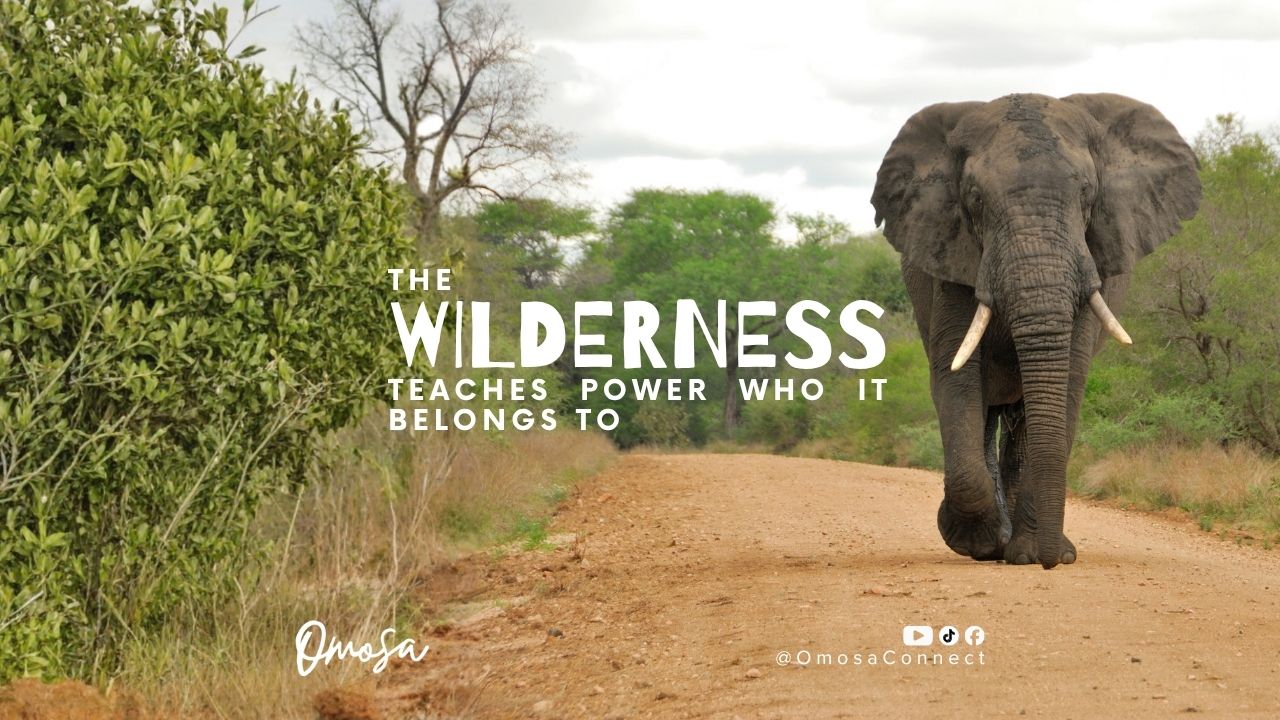
We often speak about the wilderness as though it is only the place where everything has been taken away from us, but Scripture gives us a more unsettling picture. Sometimes the wilderness is not where your power disappears. Sometimes it is where the noise disappears, the applause disappears, the easy confirmations disappear, the shortcuts become visible, and what remains is the thing God entrusted to you.
Your gift is still there. Your hunger is still there. Your power is still there.
And now we find out who it belongs to.
I have noticed a rhythm around forty (40) in Scripture that is difficult to ignore without turning it into superstition. Let’s look at a few things:
- Rain falls for forty days in the account of Noah.
- Moses is on Sinai with God for forty days and forty nights.
- Israel spends forty years in the wilderness.
- Elijah journeys forty days to Horeb.
- Nineveh is given forty days in Jonah’s warning.
- And before Jesus begins the public ministry that will alter human history, He is led by the Spirit into the wilderness for forty days.
Forty is not a magic number we need to decode, but the pattern is worth thinking about because, again and again, Scripture places people inside a stretch of time where what is underneath them is exposed. There is testing, waiting, consecration, transition, judgement, and preparation. An old state is being left behind, but the new thing has not yet fully arrived.
Anyone who has lived long enough knows that place, even if nobody has ever called it a wilderness.
It is the period between the application and the answer; between the promise and the evidence; between knowing a marriage needs healing and knowing whether both people will do the work; between starting the business and being able to pay everyone without fear; between raising the child and discovering who that child will become; and between hearing something in prayer and watching month after month pass without the thing becoming visible.
Nothing about those seasons makes for particularly good photographs. And perhaps that is why they reveal so much. Big moments give us language, but ordinary waiting exposes our government. It shows what rules us when no one is clapping, what we reach for when hunger becomes loud, and what we are willing to manipulate when the silence starts sounding like abandonment.
Jesus enters His wilderness carrying something extraordinary: the Father has already spoken over Him. Before the temptation comes the declaration. Before the devil says, “If you are the Son of God…,” the Father has already said who He is.
That order matters.
The temptation is not mainly an invitation for Jesus to become somebody else. It is an invitation for Him to use what is true about Him outside the order of God. You are the Son, so turn the stone into bread. You are the Son, so throw You’re down, and make heaven prove it. You are the King, so receive kingdoms without walking the road. You were sent to walk.
Bread is not evil. Authority is not evil. Kingship is certainly not evil in the hands of Christ. The distortion is subtler than that, which is probably why it still reaches us so easily.
It is good power detached from obedience.
That should trouble any of us who have begun to understand our own capacity, because the enemy does not always need to tempt us with something obviously corrupt. Sometimes all he has to do is take something God gave us and persuade us that because it is ours, we may use it however we please.
The gift is from God. The opportunity may be real. The hunger may be real. The ability may be real. The door may even genuinely be open, and still, obedience may say no.
There are stones we are capable of turning into bread that God has not asked us to eat.
That sentence reaches the leader who knows exactly how to make people comply, the parent who can silence a child without ever raising a hand, the spouse who knows the one sentence that will win the argument and wound the person, the preacher who knows how to move a room emotionally, the executive who can make the numbers look right long enough for somebody else to inherit the consequence, and the gifted person who can create the appearance of momentum when God has said nothing about moving.
The problem with power is not only that bad people have it. It is that good people can become convinced that being able to do something is evidence that they have permission to do it.
Jesus refuses that lie.
He does not deny His power in the wilderness. He governs it.
That is where audacious humility becomes more than a phrase. Audacity is not pretending we have no gift, no authority, no intelligence, no ambition, and no calling. False humility has buried enough things God intended to be used. But humility is not merely admitting that the gift came from God; humility is allowing God to govern its use.
Jesus knows who He is without needing to perform who He is.
He does not turn the stone into bread to reassure himself. He does not jump from the temple to reassure the crowd. He does not take the kingdom early to reassure His ambition. He knows, and because He knows, He can obey.
Some of us are exhausting ourselves trying to prove things God never asked us to prove. We are trying to prove the calling is real because the season is quiet, trying to prove the business matters because growth has slowed, trying to prove we are loved because someone has become distant, trying to prove we heard God because the outcome has not arrived when we expected it, and trying to prove we still have it because, if we are truthful, we have not felt particularly inspired lately.
“If you are…”
It is an old sentence, and it still works.
If God is with you, why are you here? If you are really called, why is nobody noticing? If you are really capable, why are you waiting? If you are really loved, why did they leave? If you really heard Him, why has nothing changed?
Before long, we are no longer obeying God. We are performing evidence for an accusation he never made.
This is why the private place matters, though we must be careful not to romanticise isolation. Loneliness can injure people. Community is a gift, correction is a gift, friendship is a gift, and the Body of Christ is a gift. But there are also things noise can hide. There are versions of ourselves we can maintain only because somebody is always watching, motives that applause keeps anaesthetised, questions we can avoid while the calendar is full, and sometimes, in mercy, God allows the room to become quiet enough for us to hear what our momentum was drowning out.
The danger is that fear can use the same quiet to offer another interpretation.
God says formation; fear says abandonment. God says, ‘Wait’; anxiety says, ‘Nothing is happening.’ God says you are Mine; insecurity says prove it. God says I am enough; hunger says turn something into bread.
This is why a wilderness cannot be judged simply by how it feels. Some painful places are consequences we need to leave, some lonely places require us to ask for help, some doors must be opened, and some circumstances must be confronted. But sometimes the season we keep trying to escape is the very place where God is teaching our strength to kneel.
A kingdom that intends to entrust people with weight needs people whose strength has learnt to kneel.
Because communities are not finally changed by gifted people. They are changed by governed people.
A brilliant leader without restraint can devastate an organisation faster than an incompetent one. A charismatic pastor without private obedience can gather thousands around a wound nobody can see. A parent with authority but without gentleness can create a home where everyone behaves and nobody feels safe. A person with money but without stewardship can feed every appetite except the soul. A person with influence but without submission can make their disorder contagious.
Power multiplies what formation has put inside it.
That is why the Kingdom of God cannot merely produce people who can do more. It must form people who have become different; people whose presence makes truth safer to tell, who can hold authority without needing everybody beneath them to feel it, who can apologise without losing their dignity, wait without becoming passive, move boldly without mistaking impulse for instruction, and sit in an unseen season without converting every stone into evidence that they are still significant.
Perhaps this is one of the reasons God does so much of His formation where nobody can applaud it. Roots do not grow because people are watching. Neither do most of the things in us that will eventually carry weight.
Maybe that is the invitation of the forty: not to count days until God finally releases us back into something important, not to become fascinated with the number, and not to turn wilderness into another spiritual aesthetic, but to ask a harder question.
What is this season teaching me about the power of who it belongs to?
Because if we leave the wilderness with all the same appetites, all the same need to be seen, all the same willingness to manipulate an outcome, and all the same inability to wait, then the wilderness may have passed around us without ever passing through us.
And that would be a tragedy.
We do not need more people who can quote the wilderness while remaining unchanged by it. The world has heard enough language. The Kingdom needs witnesses whose lives have become evidence: men and women who have discovered that obedience is not weakness, restraint is not fear, waiting is not always waste, obscurity is not the absence of God, possessing power does not give us ownership of it, and being able to do something is not the same as being sent to do it.
- There are kingdoms worth refusing if the price is worship.
- There are stones worth leaving as stones if turning them into bread would require us to become our own source.
The wilderness does not only test whether we can survive without what we want. Sometimes it reveals whether, once we have the power to take it, we still trust God enough not to.
That is audacious humility: to know what has been entrusted to you, to carry it without shrinking, to use it without worshipping it, and to have enough confidence in God to leave some stones untouched.
Because the final purpose of formation is not that we become impressive. It is that, through people increasingly governed by Christ, homes become safer, businesses become more truthful, leadership becomes more human, communities become more faithful, mercy becomes practical, justice becomes costly, love becomes durable, and the Kingdom of God becomes visible in ordinary places.
The wilderness is not merely where God prepares us for the work. Sometimes, becoming the kind of people through whom His love can safely flow is the work.