

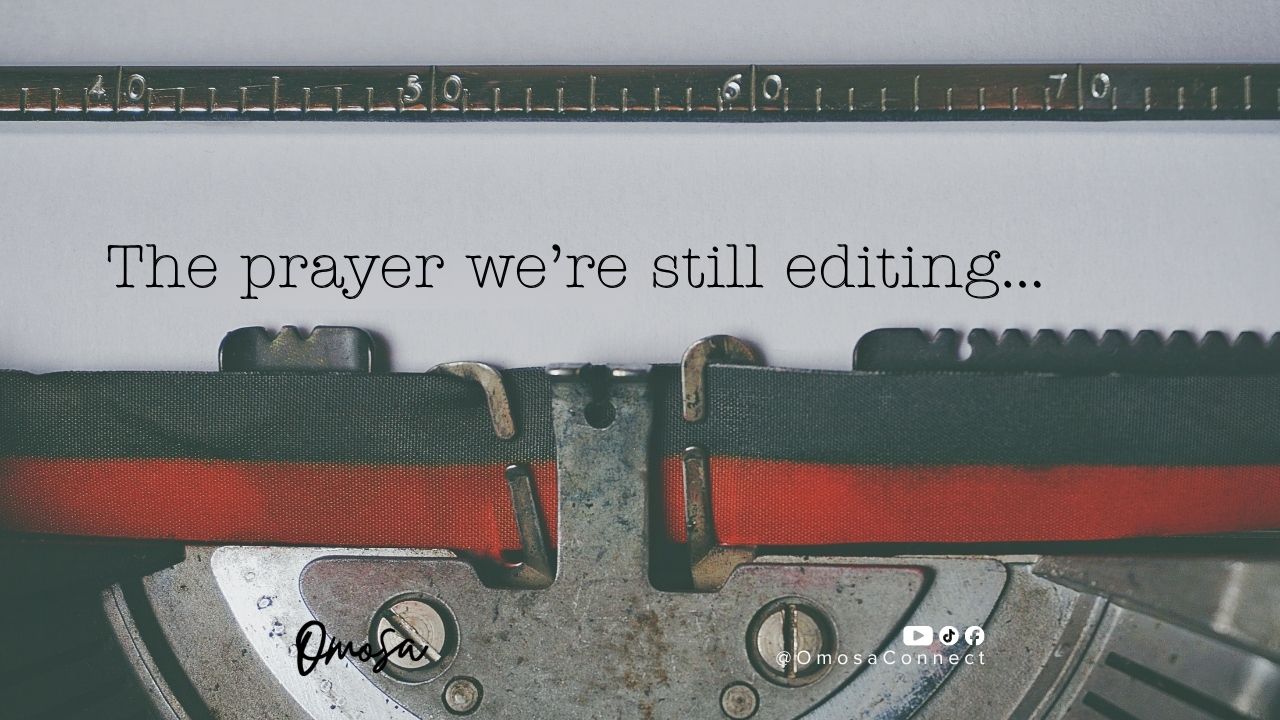

Most of us do not pray the way we live. We edit. We leave out the parts we are ashamed of, the doubts we call unbelief, the questions we are afraid to say out loud before God — as if He has not already heard them. And somewhere in that editing, the prayer stops being a conversation and becomes a performance.
We have learned, often without meaning to, that prayer should sound a certain way. Reverent. Together. Faith-filled. And so we bring God the version of ourselves that we bring to church — polished, composed, certain. We thank Him for the good things, we ask for the safe things, and we carefully avoid the honest things: the anger, the fear, the disappointment, the question we are too scared to speak because we are not sure a good Christian is allowed to ask it.
The prayer you’re afraid to pray
But the psalms are not edited. They are full of raw, unfiltered honesty — How long, O Lord? Will you forget me forever? My God, my God, why have you forsaken me? These are not the prayers of people who have it together. They are the prayers of people who are falling apart and refusing to pretend otherwise. And God did not strike them down for it. He kept those prayers in the book.
That is the scandal of it: God would rather have your honest mess than your polished performance. He is not threatened by your doubt, offended by your anger, or surprised by your questions. He already knows them anyway. The editing is not for Him — it is for you, a way of keeping yourself at a safe distance from the very One who is asking you to draw near.
The unfinished prayer
Here is the freedom: you do not have to finish the prayer before you start it. You can bring it half-formed, messy, contradictory — full of faith and fear at the same time. The goal of prayer is not to produce a perfect sentence. It is to be honest with God, the way a child is honest with a parent who already loves them and already knows.
The prayer you are still editing is probably the prayer you most need to pray. So stop editing. Bring the whole thing — the doubt, the weariness, the gratitude and the grief all tangled together. Lay it out before God without arranging it first. Because the moment the prayer stops being a performance, it finally becomes what it was always meant to be: a real conversation with a real God, who was never waiting for a perfect prayer — only for an honest one.