
If you want freedom from anxiety, remember this:
Grace is the seed God gives - it defines your identity.
Stewardship is the soil you cultivate - it aligns your life.
Faithfulness is your part - you prepare the ground.
The fruit is not yours to control. The harvest belongs to God.

God First is not anti-success
Read more here: https://www.omosa.co.za/connect/space/daily/post/friends-just-a-quick-note-to-let-y
One, Perfect Love.
I thought I’d build a simple storage box. Four cuts. Ten minutes. Done.
Instead, Saturday humbled me 😅. i ended up spending about a full hour of the time on:
- clearing space in a crammed garage,
- looking for tools,
- charging batteries,
- making room just to work.
The actual making of the box? About ten minutes.
And somewhere between moving wood and looking for tools, something settled in my heart. Love works the same way.
What people see and experience - the kind words, the dates, the gifts, the provision, the photos, the public affection - that’s the ten-minute box.
But real enduring love is everything before that:
- making space
- adjusting yourself
- managing your emotions
- choosing patience
- showing up again
- doing what’s in the interest of others
- depending on and building on righteous principles
And this is where many relationships struggle. Because much of what our culture calls love is built on things that don’t last:
- Feelings.
- Convenience.
- Chemistry.
- Attention.
- Compatibility when life is easy.
That kind of love works…until moods change. Until pressure comes. Until life becomes inconvenient. Until expectations aren’t met.
Then that love becomes:
- Withdrawal.
- Silence.
- Distance.
- Resentment.
- Replacement.
Not because we are bad people. But because the foundation was emotion - not something lasting, stronger or scriptural.
Scripture shows us a different picture of love. Love that is:
- patient
- kind
- not self-seeking
- slow to anger
- enduring
That kind of love is not sustained by feelings. It is a covenantal love sustained by formation.
- By humility.
- By self-control.
- By forgiveness.
- By commitment.
- By a heart anchored beyond itself.
And this connects to our theme this week: God First is not anti-success. It’s the preparation. Because without God as your foundation, you eventually run out:
- You run out of patience.
- You run out of grace.
- You run out of emotional capacity.
And slowly, love becomes convenience. Or performance. Or negotiation.
But when God is your Rock (O lefika laka), love doesn’t depend only on how you feel. It draws from a deeper source.
That’s what lasting love looks like.
- Not perfect.
- Not always neat.
- But anchored.
So this February, here’s the reminder: Before you try to build something for someone… make sure your heart is resting on something solid.
It’s how love and everything built on it actually lasts.
God first isn’t anti success
https://www.omosa.co.za/god-first-is-not-anti-success/
One, perfect love.
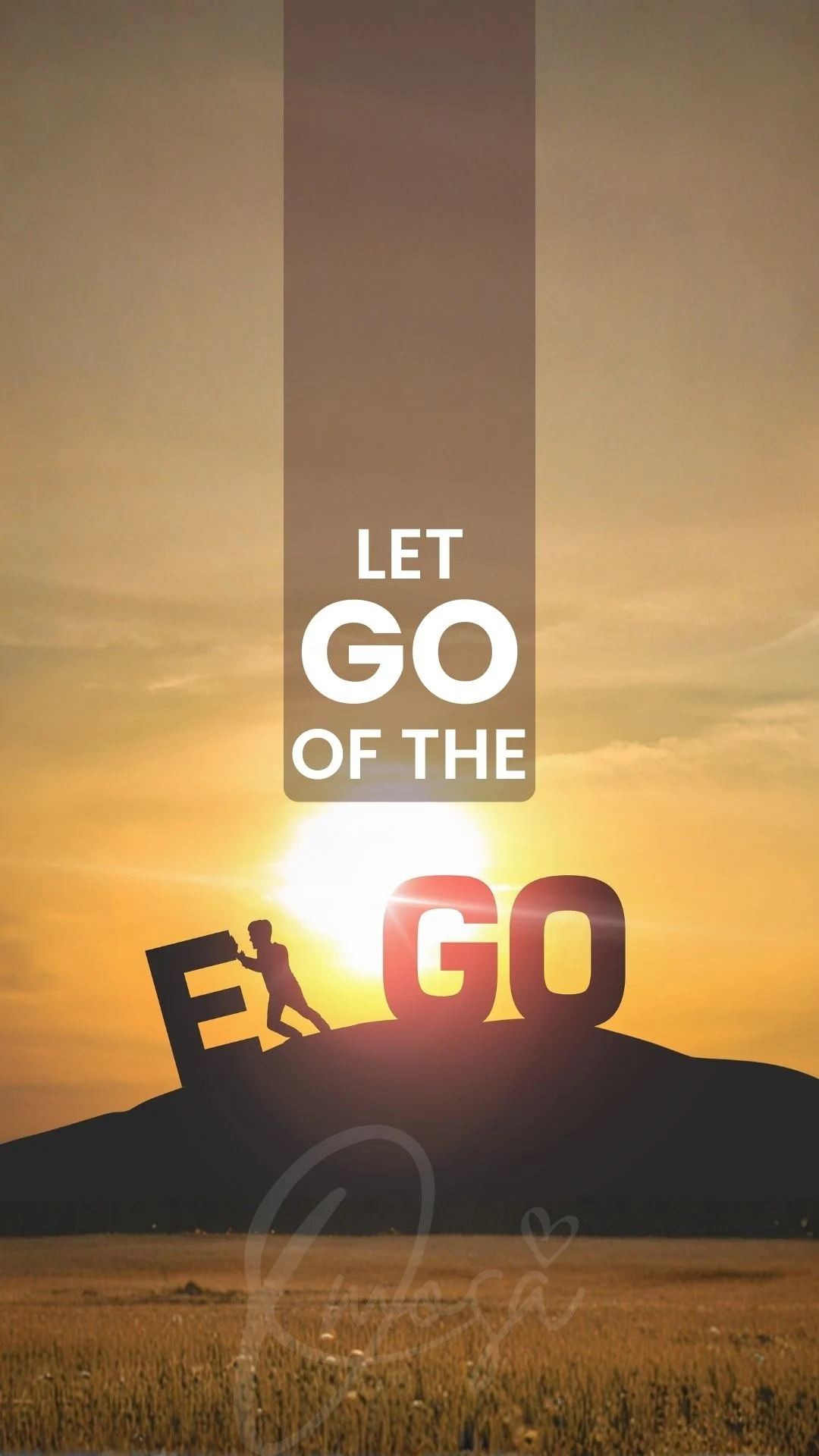
The modern definition of success is simple:
More money.
More visibility.
More control.
More speed.
More self.
And underneath all of it is a quiet theology:
“I am my own provider.”
“I am my own protector.”
“I am my own source.”
That is not ambition. That is self-worship. And self-worship always demands sacrifice. Not animals.
Your peace.
Your marriage.
Your integrity.
Your sleep.
Your children’s attention.
Your soul.
Jesus did not warn against success. He warned against success that costs your soul.
Because the most dangerous place a human being can reach is the top of the ladder
and discover it is leaning against the wrong wall. Or as one artist said, "The good news is you have come a long way. The bad news is you went the wrong way."
God First is not anti-success. - https://www.omosa.co.za/connect/space/daily/post/friends-just-a-quick-note-to-let-y
One, Perfect Love.
Friends,
Just a quick note to let you know that I won't be dropping a post today. I’m taking a brief pause this Saturday, and I hope you are finding time to truly rest and recharge today as well.
However, I want you to watch out tomorrow. At exactly 2:00 PM tomorrow (Sunday), I will be sharing a piece that is going to serve as our anchor, our focus, and the center of our discussions for the entire upcoming week. It addresses a very deep, pervasive lie we've been conditioned to believe about faith and achievement. I want you to read it, sit with the tension of it, and let it stir your spirit.
I am interested in your perspectives and comments. It's FREE to get an Omosa Connect account. You can register and leave your comments there.
Have a beautifully relaxing and restorative weekend. Look out for the post tomorrow at 2 PM, and let's journey through it together this week.
God First is not anti-success. - Read it here: https://www.omosa.co.za/god-first-is-not-anti-success/
One, Perfect Love.

Friends, I delayed posting this today because I’ve been contemplating whether to be this vulnerable. But I realise that true Stewardship requires honesty about the times we mistake Management for Faithfulness. And, in any case, I am the same person who likes to say that I'm learning as I grow and growing as I learn. So, here goes...
I spent the last year building a business engine, only to realise I was suffocating the very conviction I was called to protect. This isn't about looking back with regret; it's about returning to the Source with absolute clarity on what actually carries weight.
Read the article and let's discuss it here...
"Less Me. More You."
Hey Friends.
Today is light. No lesson. No lecture.
I made a song with AI… using words that have been living in our space for a while. And honestly, it surprised me how a melody can carry something that paragraphs can’t.
It’s the same heart, just in a different form. Have a blessed Thursday.
One, Perfect Love.
Omosa
"Dare to Believe "
The full blog article: https://www.omosa.co.za/a-song-for-ordinary-days-%f0%9f%8e%b6-omosa-stewardship-one-perfect-love/
Pick one nugget and let it become an action: a message, a boundary, a prayer, a repair, a pause, a gratitude, a choice. That’s how love moves - quietly, practically, person to person.
Omosa.
Dare to Believe.
I’ve been learning something humbling lately: sometimes what I call “being loving” is really just me being endlessly available. And when that availability runs on fumes, love doesn’t disappear - it starts showing up as tone, withdrawal, and quiet resentment. So I’ve been paying attention to that pattern in myself, not with shame, but with honesty. This piece is me sharing what I’m learning about love fatigue - not as a dramatic new label, but as a helpful lens for anyone who still cares deeply, yet feels emotionally overdrawn.
“Love fatigue” isn’t a clinical diagnosis you’ll find on a prescription pad - but it’s a very real human experience: the moment you realise you still care, yet you don’t have the emotional energy to keep carrying.
Using AI tools to help with the research, I have learned that the closest established frameworks to Love Fatigure are compassion fatigue (depletion from prolonged caring for others’ distress) (ScienceDirect), what some scholars argue is more accurately called empathic distress fatigue (when empathy turns into distress and withdrawal without strong emotion regulation) (ScienceDirect), plus the “always-on” burden of emotional labour (managing emotions to meet expectations) (City St George's, University of London). Many people also recognise the pattern as a form of burnout - exhaustion and emotional distance after chronic, unmanaged stress (who.int).
What love fatigue looks like (something some of us might recognise in real life)
It’s not dramatic. Not always obvious. Often it shows up as:
· becoming unusually irritated by small things
· withdrawing from people you actually love
· feeling numb, then feeling guilty about being numb
· “I can’t deal” energy, even when nothing is wrong
· giving “because I must,” not because you want to
It’s not that love disappeared. It’s that your capacity did.
Why it happens
Love fatigue is usually a systems problem, not a character flaw. It tends to grow when:
· your care is constant, but your replenishment is random
· you confuse love with unlimited access (everyone gets you whenever)
· you absorb other people’s emotions as if they are yours (a self–other boundary issue, which research links to empathic distress) (ScienceDirect)
· you’re doing emotional labour at home or at work - “being okay,” keeping the peace, staying pleasant - even when you’re depleted (City St George's, University of London)
The cost of ignoring it
When fatigue is ignored, love doesn’t stop - it mutates. It becomes tone. Distance. Resentment. Silence. Transaction. That’s why this matters: not just for your comfort, but for the quality of your relationships.
A healthier way to love
If you’re learning this with me, here are four grounded moves:
- Name your capacity without shame.
“I’m at my limit today” is information, not failure. - Separate love from availability.
You can care deeply and still be unavailable. Boundaries are love with structure. - Practice compassion without absorption.
You can be present without taking someone’s pain home inside your body. (This is the difference researchers point to between compassion and empathic distress.) (ScienceDirect) - Build a replenishment rhythm.
Not only “rest when you break,” but “refuel before you’re empty.” Chronic unmanaged stress is exactly what burnout frameworks warn about. (who.int)
A simple reframe
If you’re feeling love fatigue, don’t panic and call it hardness.
You might not be out of love.
You might just be out of fuel.
And the most loving thing you can do next is restore capacity - so your love can stay clean, kind, and sustainable.
Shap shap…
If any part of this resonates, let it land gently: love fatigue is not proof that you’ve become hard - it’s often proof that you’ve been giving without a rhythm. And the goal isn’t to love less. The goal is to love cleaner: with boundaries, replenishment, and integrity, so your care can remain steady instead of sporadic. Restore capacity. Rebuild rhythm. Because love is too sacred to be reduced to burnout - and the people you love deserve a version of you that isn’t surviving on empty.
One, Perfect Love.

Today’s post was sparked by a line I saw in the Bible app (Rachel G. Scott & Friends):
“Love isn't defined by feelings or emotions nor by our own interpretation. It's defined by obedience to God's commands.”
That sentence is both comforting and confronting.
Comforting, because it rescues love from the instability of mood.
Confronting, because it exposes how often we’ve called something “love” simply because it felt sincere.
If love is defined by obedience, then love isn’t primarily something you fall into. Love is something you align to. And that brings me to one of Jesus’ most quoted teachings—often used like a strategy:
“But seek first his kingdom and his righteousness, and all these things will be given to you as well.”
— Matthew 6:33 (NIV)
Let’s be honest: many people treat this verse like a prosperity hack.
Do this first… and then God will add the rest.
But what if we’ve been reading it too shallowly?
What if “seek first” is not a technique to get “things”… but an act of love? Because what you seek first is what you love most. Not what you say you love most. What you prioritise when life gets loud.
Seeking first is obedience-love
If Rachel’s line is true - and it is - then love isn’t defined by our interpretation. It’s defined by God’s command. Which means “seek first” isn’t a suggestion for the super-spiritual. It’s a blueprint for ordered love.
Seeking first is what love looks like when it becomes obedient.
It means God gets the first portion of your attention before anxiety does. The first portion of your decisions before desire does. The first portion of your loyalty before people-pleasing does. And once the order is right, the other loves stop collapsing into their distorted forms.
Storge: familiar love becomes hospitality
Storge is beautiful - family love, belonging, comfort. But when it isn’t anchored in God, familiarity can become a fence. “Us vs them.” Closed circles. Seeking first the Kingdom turns Storge outward. It keeps home warm without making it tribal.
Philia: friendship becomes humble truth
Philia is shoulder-to-shoulder love - shared pursuit. But even friendship can become pride when shared truth becomes superiority. Seeking first humbles Philia. It makes friends more teachable, less performative.
Eros: desire becomes disciplined
Eros is spark, attraction, creation-energy. God made it. But without righteousness, desire becomes its own compass - and good things become destructive things. Seeking first doesn’t cancel desire. It disciplines it. Passion becomes promise, not appetite.
Philautia: self-love becomes stewardship
Self-love without God becomes self-worship.
Self-love with God becomes stewardship.
Seeking first stabilises identity. You stop using outcomes and relationships to prove you matter. You start living from being held.
Agape: the pivot becomes practical
Agape is love that moves first - the love of the cross. But Agape doesn’t flow through a life governed by fear, control, or constant demand. Seeking first is how Agape becomes livable. It is obedience-love in motion. And that’s why Jesus frames “seek first” in the context of worry. Because worry is what happens when love is disordered.
So here’s the question this verse asks you - not as a hack, but as a calling:
What gets your first devotion?
Your first attention?
Your first trust?
Your first obedience?
Before you chase outcomes, seek first.
Before you demand answers, seek first.
Before you react, seek first.
Before you try to be loved, seek first.
Not as superstition. As love.
Because if love is defined by obedience to God’s commands, then seeking first is not optional - it’s foundational.
And here’s the “all these things” part - without the gimmick:
When love is rightly ordered, life becomes less frantic. Decisions become clearer. Relationships become cleaner. Work becomes worship. And what you truly need for the assignment you’ve been given begins to arrive as provision instead of obsession.
Love isn’t defined by feeling. Love is defined by obedience.
Seek first... One, Perfect. Love.